

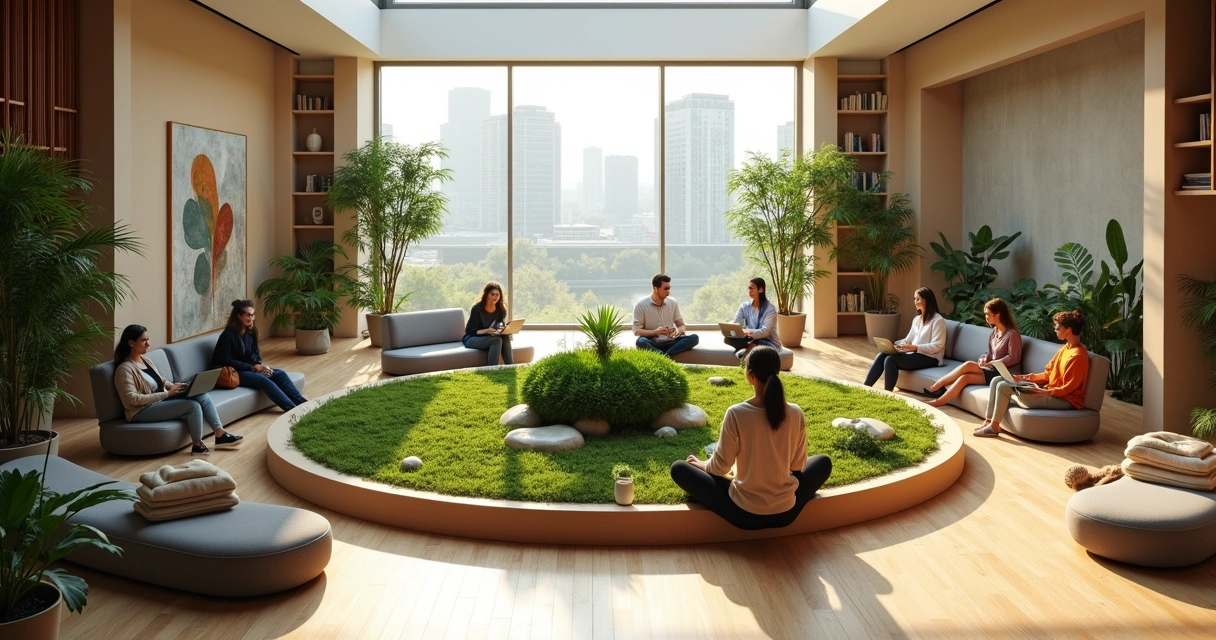
We often talk about culture as if it lives only in values, policies, or speeches. Yet we have seen something simpler and more direct. Culture also lives in walls, sound, light, distance, and movement. A workplace teaches people how to relate long before a meeting begins.
Workspace design shapes attention, behavior, and the quality of shared awareness.
When people walk into a space that feels tense, crowded, loud, or confusing, they do not leave that impact at the door. Their nervous system carries it into decisions, conversations, and conflict. The opposite is also true. A clear and human space can help people listen better, speak with more care, and notice what is happening around them.
We think organizational awareness begins with perception. Can people sense what matters here? Can they read the emotional tone of the team? Can they tell when focus is needed, when dialogue is needed, and when repair is needed? Good design supports that kind of awareness without forcing it.
Why space affects consciousness at work
A workplace is never neutral. It either fragments attention or supports coherence. In our experience, many teams struggle not because people lack skill, but because the environment keeps placing them in states of low patience and partial presence.
A multi-university review published in the Journal of Management gathered decades of findings and showed that ambience, layout, and aesthetics shape task performance, health, motivation, and work processes. We read this as a clear sign that physical space is part of organizational behavior, not a side topic.
Think of a team entering a room with harsh lighting, constant interruptions, and no privacy. People become more guarded. They shorten their thoughts. They react faster and reflect less. Small issues grow.
Space teaches people how to feel together.
That is why awareness-friendly design is not decoration. It is a way to support maturity in daily work.
What aware workspaces tend to include
We have noticed that the best spaces do not try to impress first. They try to regulate human experience. They reduce noise where focus is needed. They create access where dialogue is needed. They signal care through order, comfort, and intention.
Some features often support this:
Natural light that helps people stay awake, calm, and oriented through the day.
Clear transitions between quiet zones, shared zones, and private zones.
Acoustic control that lowers stress and keeps conversations from leaking into every task.
Visual openness without total exposure, so people can feel connected without feeling watched.
Simple layouts that make movement easy and reduce mental clutter.
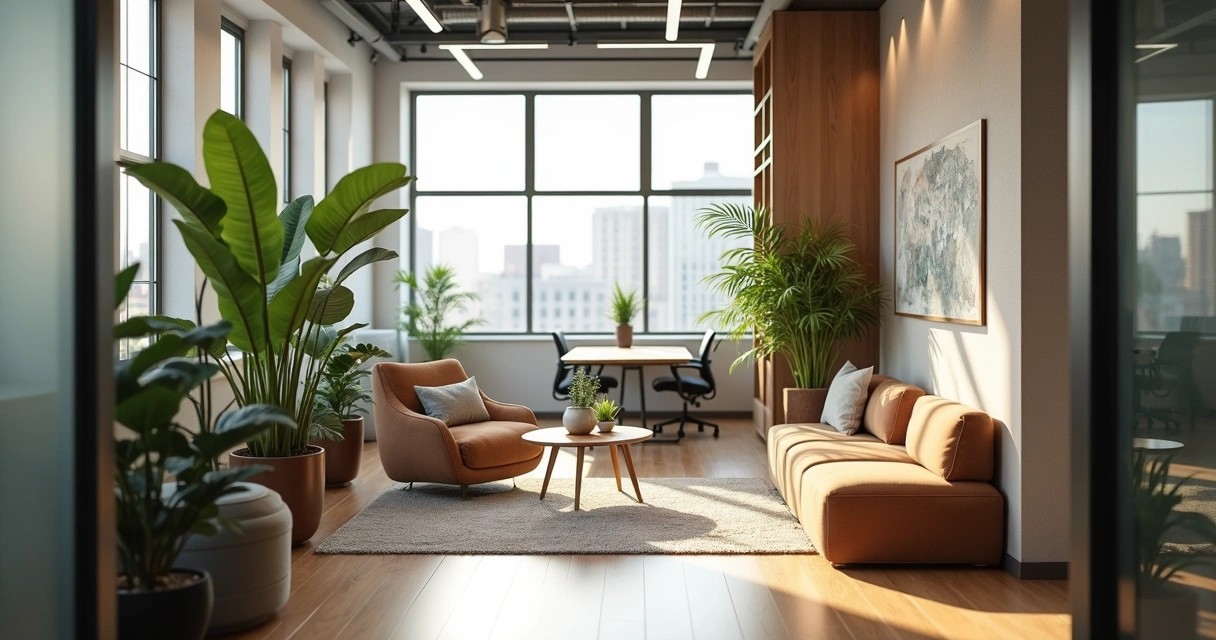
Signs of humanity such as plants, warm materials, and spaces for pause.
The best workspace features are the ones that help people regulate attention and relate with less friction.
We are not talking about luxury. We are talking about conditions that support respect, clarity, and steadiness.

Designing for both focus and connection
One mistake we still see is treating all work as the same kind of activity. It is not. Some moments need silence. Others need exchange. If one space tries to host every mental state at once, tension rises.
We think aware design gives each type of work a place. A person writing a sensitive report should not compete with a nearby brainstorming session. A team resolving a hard issue should not whisper in a hallway because no room feels safe enough.
Research from the Center for the Built Environment at UC Berkeley on team workspace design and collaboration shows that layout, enclosure, acoustics, and visual access can either weaken or support team interaction. That matters because awareness is social. People need environments where they can notice each other clearly, without overload.
A simple way to think about this is through three layers:
Spaces for deep focus, where interruption is rare and sound is controlled.
Spaces for active collaboration, where speaking, sketching, and shared thinking feel natural.
Spaces for reflection and reset, where a person can step out, breathe, and return with better presence.
When these layers exist, people spend less energy defending their attention. That changes how they show up for one another.
Small signals that shape collective behavior
Sometimes the strongest effects come from details that seem minor. We once saw a team become calmer after making one change. They moved a noisy printer out of the main shared room. The result was not dramatic on paper, yet conversations became less sharp within days. People stayed with their thoughts longer. Interruptions dropped. The room felt less charged.
This is how awareness grows in practice. Not through slogans, but through repeated signals.
Consider the kinds of signals a workplace sends every day:
If every seat faces movement, people stay alert instead of grounded.
If meeting rooms have glass on every side, honest talk may shrink.
If there is nowhere to pause after conflict, stress carries into the next task.
If shared areas feel welcoming, informal trust tends to grow.
Organizational awareness grows when people can notice more and defend themselves less.
That is one reason design should be read as an ethical act. It expresses what a workplace expects from people, and what it is willing to support in return.
How to redesign with awareness in mind
We do not think a full rebuild is always needed. Many workplaces can shift the emotional tone of the day through careful changes. What matters is starting from observation instead of fashion.
We suggest asking a few grounded questions before changing anything:
Where do people lose focus most often?
Which conversations need more privacy than the current space allows?
What areas create tension, congestion, or sensory fatigue?
Where does connection happen naturally, and where does it feel forced?
Then act in sequence. Reduce noise. Clarify zones. Improve comfort. Add spaces for transition. Test small changes before larger ones.
Short sentences can shift a design process too. We use them often.
Calm is a design choice.
So is privacy. So is dignity. So is the ability to think.
Conclusion
Designing workspaces that nurture organizational awareness means shaping conditions where people can perceive clearly, relate honestly, and act with more steadiness. We believe this kind of space does not remove every conflict or mistake. It does something better. It helps people meet reality with more presence.
When a workplace supports focus, reflection, and human connection in the right measure, awareness becomes easier to sustain. And when awareness is easier to sustain, better choices become more common.
Frequently asked questions
What is organizational awareness in workspaces?
Organizational awareness in workspaces is the shared ability to notice what is happening in the team, the environment, and the flow of work. It includes reading social cues, sensing tension, knowing when to focus or collaborate, and understanding how the physical setting affects behavior.
How can workspace design boost awareness?
Workspace design boosts awareness by reducing overload and making focus, dialogue, and reflection easier. Good acoustics, clear zones, natural light, and balanced privacy help people stay present and respond with more care.
What are the best workspace features?
The best workspace features usually include natural light, sound control, comfortable seating, clear circulation, quiet areas, collaborative areas, and small spaces for pause. The right mix depends on the team, but the goal stays the same: support attention and healthy interaction.
Is it worth it to redesign workspaces?
Yes, in many cases it is worth it. Even modest changes can improve comfort, reduce friction, and support better communication. A redesign does not need to be large or costly to create a healthier daily experience.
How do open offices affect awareness?
Open offices can help visibility and spontaneous contact, but they can also raise noise, distraction, and self-consciousness. Their effect on awareness depends on balance. Without quiet zones, acoustic support, and some privacy, open layouts often weaken attention and honest exchange.